The guillotine and math have more in common than you might think. When you think of the French Revolution, you probably imagine angry mobs and executions, not great mathematicians and calculus textbooks. But behind the political chaos was a transformation that reshaped calculus. This article explores how the French Revolution set the stage for modern calculus by enacting educational reforms, shifting the mindset around math, and bringing together many brilliant mathematicians.
In the 1600s, Newton and Leibniz gave the world a powerful tool: calculus. But their calculus wasn’t a finished product, still full of gaps and inconsistencies. Solid definitions of many terms at the core of calculus today, like limits, functions, and convergence, didn’t yet exist.
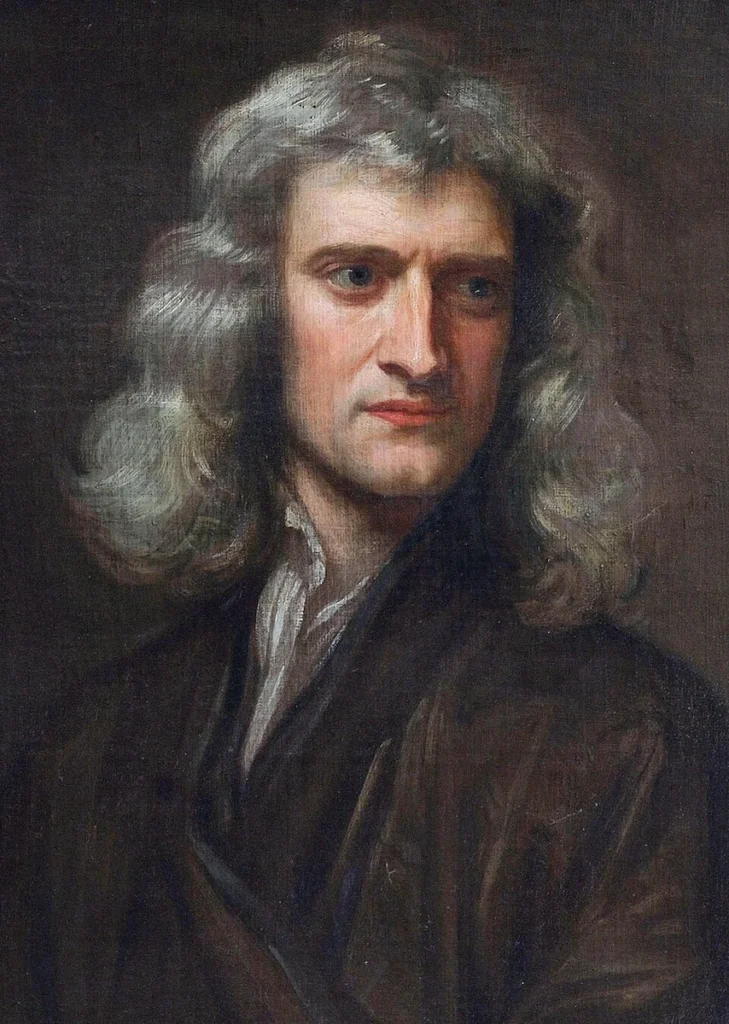
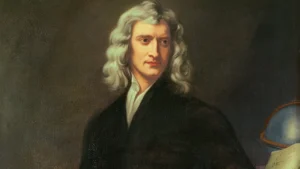
Isaac Newton
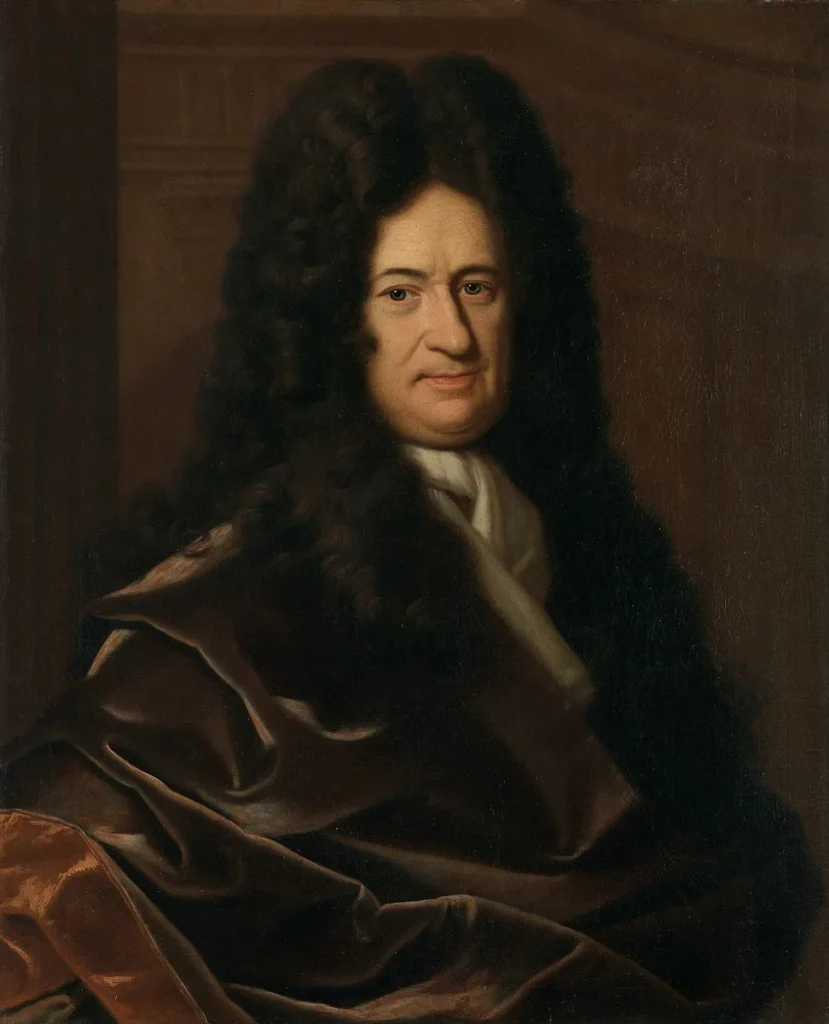
Gottfried Wilhelm Leibniz
Both Newton and Leibniz first built their calculus around infinitesimals: quantities greater than zero but smaller than any number. They worked, but were logically inconsistent: infinitesimals were treated as non-zero when finding derivatives, but then as zero when simplifying expressions, a clear contradiction. To try and fix this, Newton introduced the “prime and ultimate ratio”, a method similar to limits, but this method was still vaguely defined. Leibniz, meanwhile, stuck with infinitesimals, dismissing critics as overprecise. Newton and Leibniz were able to introduce a powerful new tool to the world, but neither successfully laid the foundations necessary for modern calculus, leaving it on uncertain logical ground. But shaky theory wasn’t the only barrier; access to that theory was even harder to come by.
If you wanted to learn calculus before the revolution, good luck. Calculus education wasn’t anywhere near what it is today. Elite colleges existed, but high tuition limited access to anyone but the nobles and the rich. Even in these colleges, research was prioritized over teaching. Newton was a Professor of Mathematics at the University of Cambridge, but he only actually taught in the early 1670s and stopped entirely after publishing his first calculus work in the Principia. Influential textbooks like L’Hospital’s Analyse des infiniment petits and Euler’s Institutiones calculi differentialis were published, but unless you were already an expert, they wouldn’t have been of much use. Both were criticized for having issues in presentation and difficulty, requiring extensive background knowledge to understand. On top of that, Euler’s book was written in Latin, comprehensible only to those with a strong classical education.
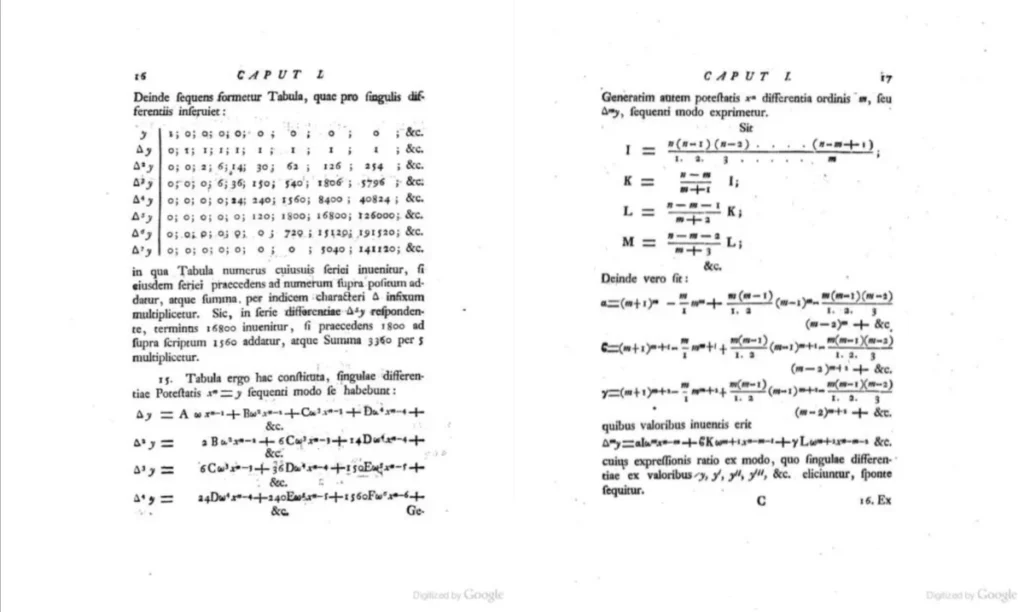
Euler’s Institutiones calculi differentialis
So why would revolutionary leaders care so much about math? Shouldn’t they have been too busy toppling the nobility and rebuilding the country? They cared because math meant power. In a nation rebuilding itself from scratch, math was not only philosophical but also incredibly practical. Engineers, scientists, and military leaders needed calculus to build bridges, map terrain, and advance technology. Revolutionary leaders were also heavily inspired by Enlightenment thinkers who saw math as the universal language of truth, making math central in their vision of a rational and meritocratic society.
The revolution created perfect conditions for calculus to develop. It made the field far more accessible to the broader public, brought together brilliant mathematicians to both teach and refine its fundamentals, and also shifted the focus toward rigor while establishing calculus as a key part of society and education.
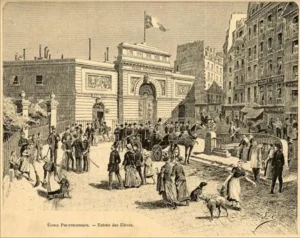
Beyond toppling their king, the French Revolution also toppled longstanding educational barriers. In 1794, revolutionary leaders founded the École Polytechnique, a free, merit-based university where calculus was central to the curriculum. Entrance to the École was determined solely by a competitive entrance exam, opening the door to students from all backgrounds. Even students who couldn’t afford tuition were supported, being given a soldier’s salary to continue studying. The teachers were some of the best mathematicians in France, including Lagrange, Monge, and De Prony. The École went on to train many brilliant mathematicians, leaving a lasting influence on math long after the revolution. Among its most famous students was Cauchy, who attended the École from 1805 to 1807 before returning to work there as a professor in 1815.
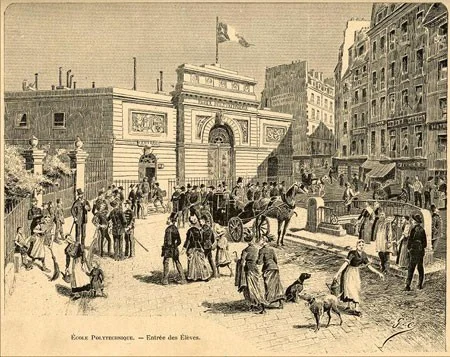
The École Polytechnique
Gone were the days of complex and inaccessible textbooks. New textbooks created in the revolution reflected this shift towards education, being clearer, more systematic works that aimed to teach calculus to a wider audience. One example is Lagrange’s Théorie des fonctions analytiques (1797), which was based on his lectures at the École and was one of the first textbooks about real analytic functions. Writing specifically to educate, Lagrange provided a unified and systematic presentation of the foundations of calculus meant to benefit students at the École.
Revolutionary leaders brought together a dream team of French mathematicians to teach at the École. They would educate the next generation while continuing their work and laying the rigorous foundations of modern calculus.
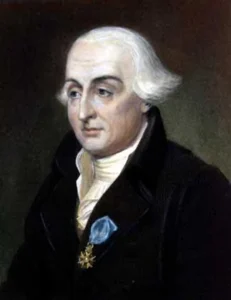
Joseph-Louis Lagrange
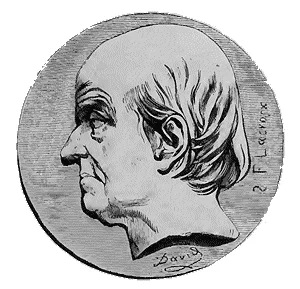
Sylvestre François Lacroix
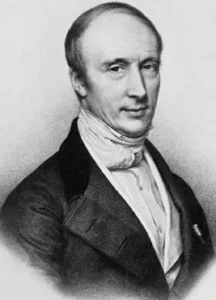
Augustin-Louis Cauchy
Lagrange
Lagrange, one of the era’s leading mathematicians, was invited back to France to teach at the new École. He had previously been a professor in Berlin but became unproductive after King Frederick II’s death, as the new monarch showed little interest in science or mathematics. Once in France, beyond just teaching, Lagrange did lots of work on the rigorous foundations of calculus, attempting to provide a purely algebraic foundation by expressing derivatives through power series expansions. Though this approach was limited and didn’t succeed, his focus on rigor and systematic frameworks shifted the way calculus was taught and perceived, setting the stage for future works on the foundations of calculus.
Lacroix
Lacroix transformed calculus education. His textbooks simplified complex ideas and reached audiences across Europe and beyond. While teaching at the École Centrale des Quatre Nations, one of many secondary schools established by the revolutionary French government, he wrote Traité du calcul différentiel et du calcul intégral, a three-volume textbook that provided a clear and up-to-date picture of mathematical analysis. Later, in 1802, as a professor at the Ecole Polytechnique, he published an abridged version, the Traité élémentaire de calcul differéntiel et du calcul intégral. This version of the book spread rapidly, being translated into English, German, Italian, and Portuguese, introducing many new ideas to the rest of Europe. Most notably, its 1816 English translation brought European differential and functional notation to Britain, ending Newton’s inferior notation while introducing Britain to a more modern calculus framework.
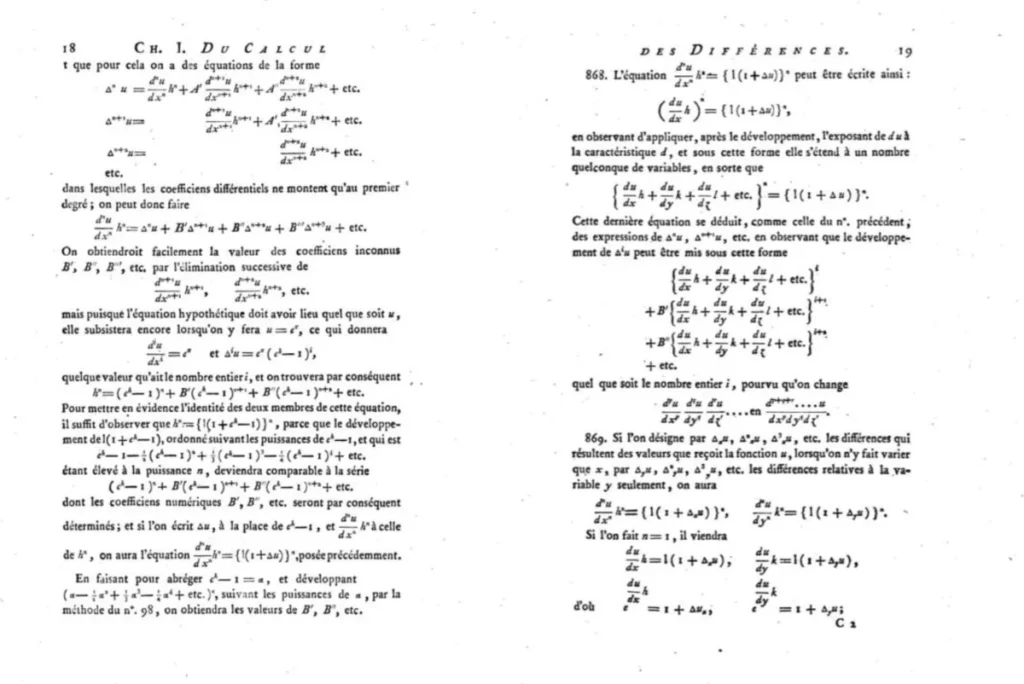
Lacroix’s Traité du calcul différentiel et du calcul intégral
Cauchy
Finally came Cauchy, the revolution’s star student, and the one who brought calculus to the next level. After attending the École Polytechnique as a student from 1805 to 1807, he returned as a professor in 1815, redefining calculus. At the École, Cauchy wrote the groundbreaking Cours d’analyse de l’École Royale Polytechnique (1821), a textbook designed to accompany his analysis course. In it, he created the first precise definitions for concepts like functions, limits, and derivatives, laid the groundwork for delta-epsilon proofs, and established the foundations of modern calculus. Beyond just providing definitions, he was able to base calculus on limits, transforming previous discoveries on continuous functions, infinite series, derivatives, and integrals into theorems in the new rigorous analysis. The modern, limits-based calculus we know today began here with Cauchy.
The revolution didn’t just change institutions; it also changed attitudes. No longer something sponsored solely by kings, math became an essential field at the center of education and national progress. The founding of new schools like the École Polytechnique made teaching just as important as research, forcing mathematicians to focus on solidifying calculus. It was at the École that Cauchy developed the first rigorous foundation of calculus. Cauchy’s work didn’t just raise the bar; it redefined it. From then on, rigor was no longer optional; it was the standard. What had begun as a specialized, emerging field with shaky foundations had now become a formal subject that could be reliably taught and understood.
The revolution’s legacy didn’t stop at France’s borders. Its new model of education spread across the world as schools from West Point to the Colegio Militar y Escuela Politécnica in Colombia adopted many aspects of the École Polytechnique’s curriculum. French textbooks like Lacroix’s Traité élémentaire de calcul différentiel et integral became global references, with calculus moving to classrooms around the world. The importance of math also increased significantly, with curricula such as differential and integral calculus becoming core components in engineering and military education. Revolutionary France had ignited a global transformation in math.
Why did this unique transformation occur in France and not elsewhere? France was uniquely positioned because of its revolution, replacing the old order with merit-based systems and a focus on education that allowed math to thrive. Many other countries had obstacles to math’s development: China’s civil service exam led to a sole focus on Confucian classics, and the Arab world focused education on religion, leaving it in the hands of the ulama (religious teachers and scholars). In India, the Kerala School did promising work on trigonometry and geometry, developing ideas recognized as precursors to calculus, but its isolation and language barriers limited the spread of its work and led to most of it disappearing.
The French Revolution didn’t just change politics; it reshaped calculus. It created excellent merit-based schools like the École Polytechnique, brought together brilliant mathematicians as professors, and produced excellent, accessible textbooks that would influence the world. The increase in emphasis on math, rigor, and teaching created the perfect conditions for the development of the definitions and foundations of calculus that we see today. These reforms spread across the rest of the world as the French system, curriculum, and textbooks were adopted. The guillotine may be the revolution’s most famous symbol, but in classrooms around the world, another one lives on: calculus.