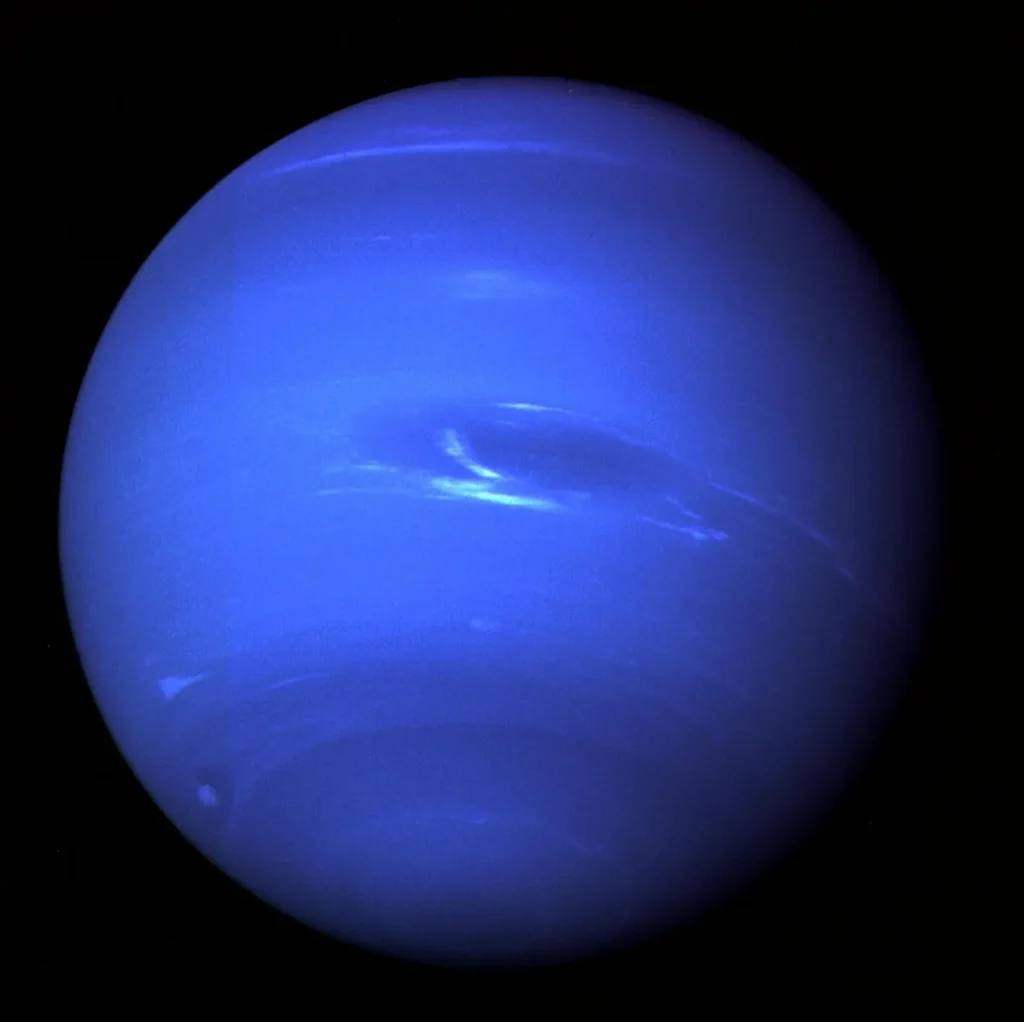
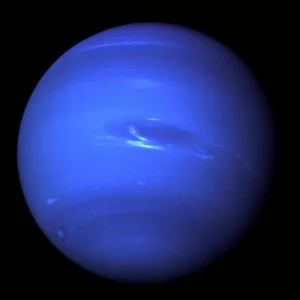
Imagine knowing that just by pointing a telescope at a specific place in the sky, you will be the first person ever to see an undiscovered planet. That is what happened in 1846, when astronomer Johann Galle first spotted Neptune exactly where mathematicians had predicted it would be. Every other planet visible to the naked eye had been known since antiquity, and even Uranus had been discovered only because William Herschel happened to notice it while sweeping the sky with a telescope. Neptune was different. It was the first planet discovered not by accident or luck, but by mathematical prediction. Using Newton’s laws, mathematicians were able to infer that a planet existed beyond Uranus and estimate where it should be found.
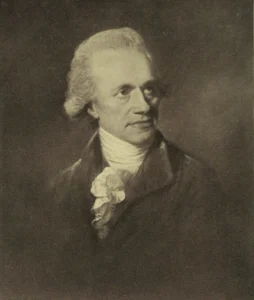
In 1781, William Herschel discovered Uranus, the first new planet observed in recorded history since ancient times. While cataloging stars, he noticed an object he first believed to be a comet. Further observation showed that it lacked the usual features of a comet, such as a tail, and might actually be a planet. Older records were revisited, and astronomers realized Uranus had been observed many times before but mistaken for an ordinary star. Some historians even argue it may have appeared in Hipparchos’s star catalog as early as 128 BC. Once Uranus was recognized as a planet, scientists could begin estimating its orbit.
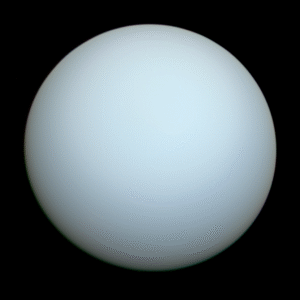
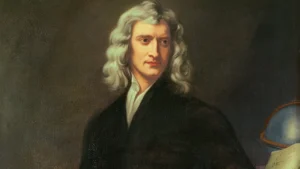
At first, everything seemed consistent. But after decades of observation, astronomers noticed that Uranus was drifting slightly away from where Newtonian predictions said it should be. The mismatch was small, but it mattered. Newton’s laws were not the problem, so astronomers proposed another explanation: an unseen planet farther out was tugging on Uranus and disturbing its orbit. If that was true, mathematicians could work backward from Uranus’s motion and predict where the unknown planet ought to be. That is exactly what they did.
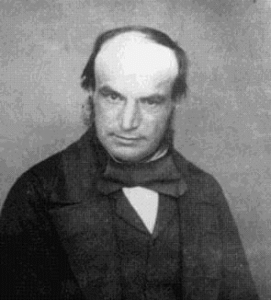
Le Verrier
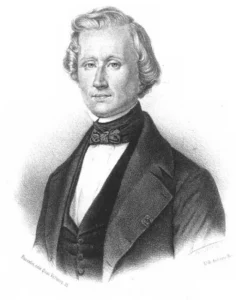
Adams
So who actually found Neptune? The two central figures were Urbain Le Verrier in France and John Couch Adams in England. Both treated Uranus’s orbit as a mathematical problem: if the planet was deviating from prediction, could those deviations reveal the mass and orbit of an unknown planet?
Adams and Le Verrier compared Uranus’s observed path with its predicted one. If Uranus’s actual longitude differed from its expected longitude, that difference could be explained as a gravitational perturbation caused by another body. In simplified form, they were solving a problem like $\Delta r \sim \frac{G m’}{d^2} f(\theta)$, where $m’$ represented the unknown planet’s mass, $d$ its distance, and $f(\theta)$ a factor that accounted for orbital geometry. By adjusting the unknowns until Uranus’s errors were explained, they could estimate both the location and the size of the hidden planet.
Adams completed his calculations earlier, but Le Verrier’s results were published first and actually led to the observation of Neptune. Their predictions were remarkably close, placing Neptune near $325^\circ$ ecliptic longitude. Adams failed to convince observers to verify his work, but Le Verrier sent his calculations to Johann Galle in Berlin. Galle pointed his telescope to the predicted position and found Neptune within about one degree of Le Verrier’s estimate. Adams had reached nearly the same conclusion, but Le Verrier’s communication and follow-through are what directly produced the discovery.
The discovery of Neptune quickly became controversial and turned into a matter of national pride. In Britain, many supported Adams. In France, Le Verrier was championed. The dispute centered on a difficult question: should more credit go to the person who first solved the mathematics, or to the person whose published work actually caused the planet to be observed? Today, both are generally recognized as co-predictors. Adams developed the same core result earlier, while Le Verrier was the one whose published prediction led directly to Neptune being seen through a telescope.
There is also a separate theory that Galileo may have observed Neptune more than a century earlier. That is not impossible, since Herschel discovered Uranus by chance and Galileo could have stumbled onto Neptune in a similar way. But the evidence is weak, and even if Galileo did record Neptune, there is no clear sign that he recognized it as a planet. For that reason, he is not generally counted as Neptune’s discoverer.
The discovery of Neptune was more than the addition of another planet to the solar system. It was a demonstration of the power of mathematics. By studying small irregularities in Uranus’s orbit, Adams and Le Verrier were able to reverse-engineer the existence and approximate location of an unseen planet. Their success showed that Newton’s laws and mathematical reasoning could reveal real objects long before human beings actually saw them. Neptune remains one of the clearest examples of math leading directly to a major scientific discovery.