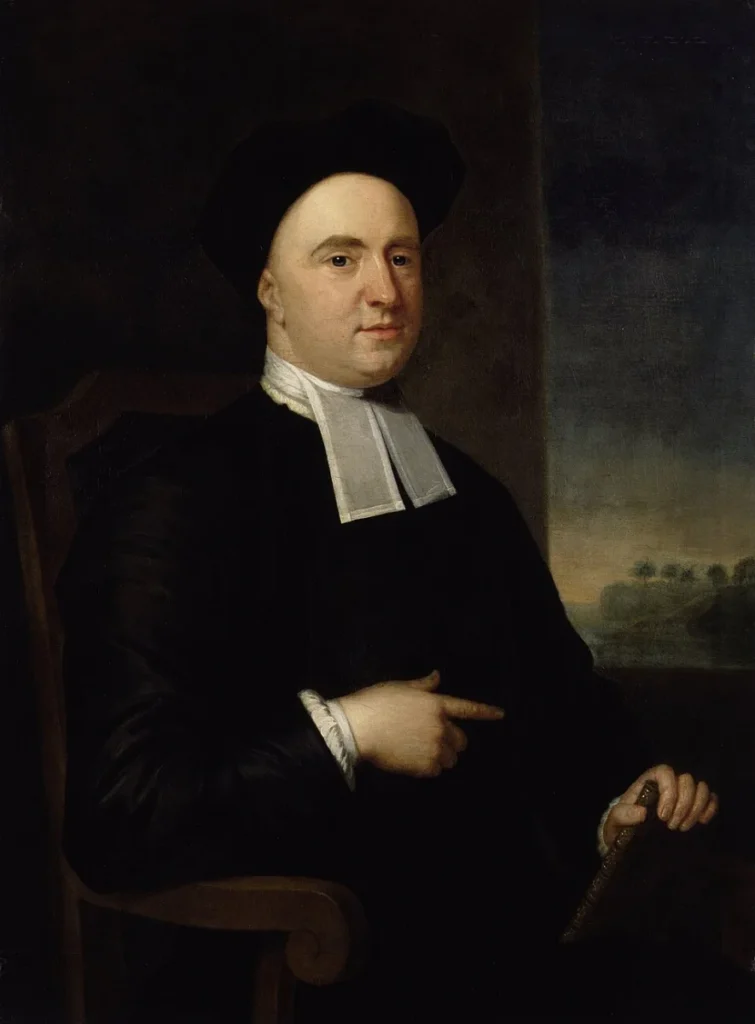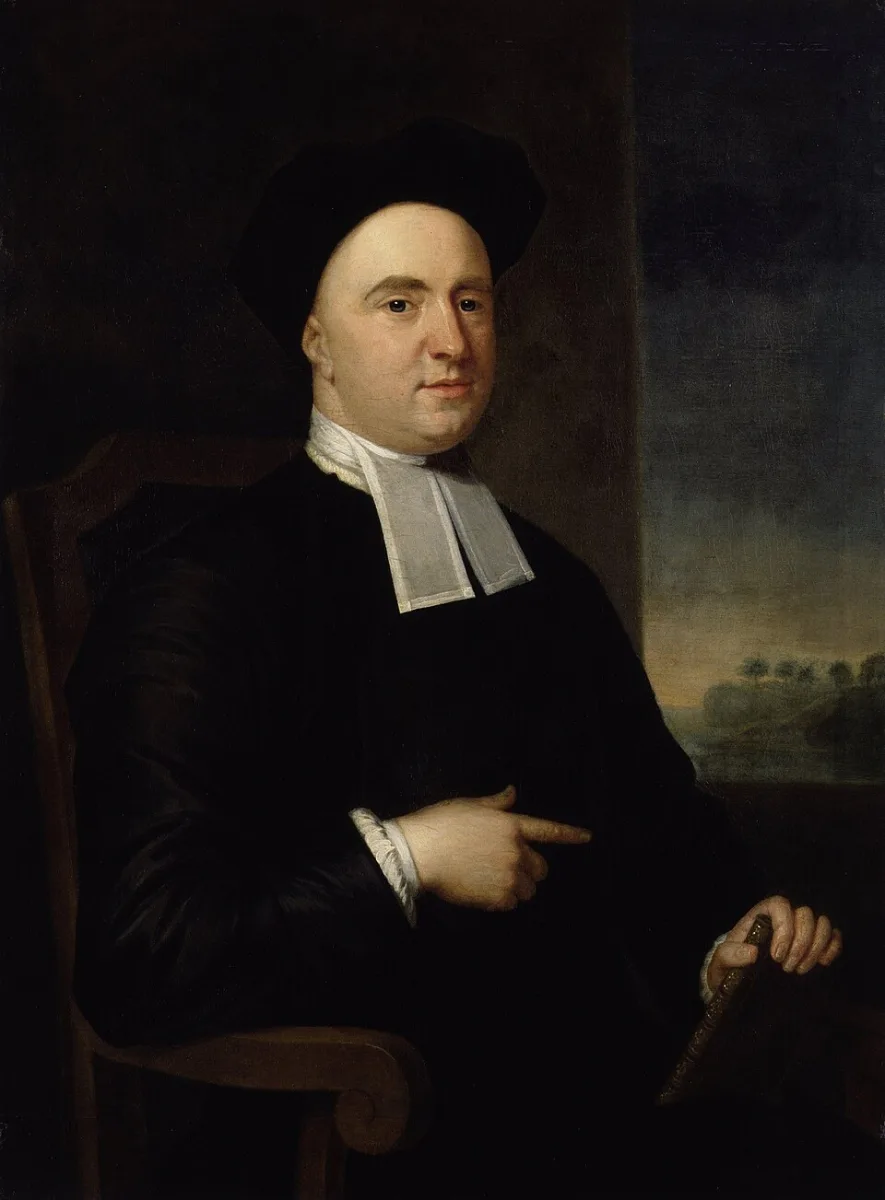
Could you imagine a philosopher and bishop challenging the foundations of calculus and being right? In 1734, George Berkeley, an Irish philosopher who had just been appointed Bishop of Cloyne, published a book titled The Analyst, or, A Discourse Addressed to an Infidel Mathematician. In it, he attacked the foundations of calculus, pointing out logical inconsistencies in Newton’s fluxions and Leibniz’s infinitesimals. Though he wasn’t a mathematician himself, he raised an incredibly important issue, one that wouldn’t be solved until Cauchy formalized limits nearly a hundred years later.
George Berkeley is primarily known not for math, but for his work as a philosopher. Berkeley was one of the greatest philosophers of his time, usually grouped with John Locke and David Hume as one of the three major British empiricists. In his work, he argued that reality consists only of minds and their ideas, and that the world is just a collection of ideas in the minds of those perceiving it. To this day, his work continues to be read by many philosophy classes, and both UC Berkeley and the city of Berkeley itself are named after him.
Beyond his philosophical work, Berkeley was also interested in religion, vision, physics, economics, medicine, and math. While his main profession was never math, he was much more than a religious man blindly attacking math, and he had extensively studied the math and science of his time. Though religion played a role in his critique of calculus in The Analyst, his arguments were generally sound.
In the late 1600s, Newton and Leibniz independently developed calculus. Newton imagined quantities as “flowing” over time, calling the changing quantities fluents, while their instantaneous rates of change were fluxions, which are essentially derivatives. Leibniz relied on infinitesimals, nonzero quantities smaller than any finite number. The full story of the development of Calculus, including Newton and Leibniz’s contributions, can be found in our History of Calculus article.
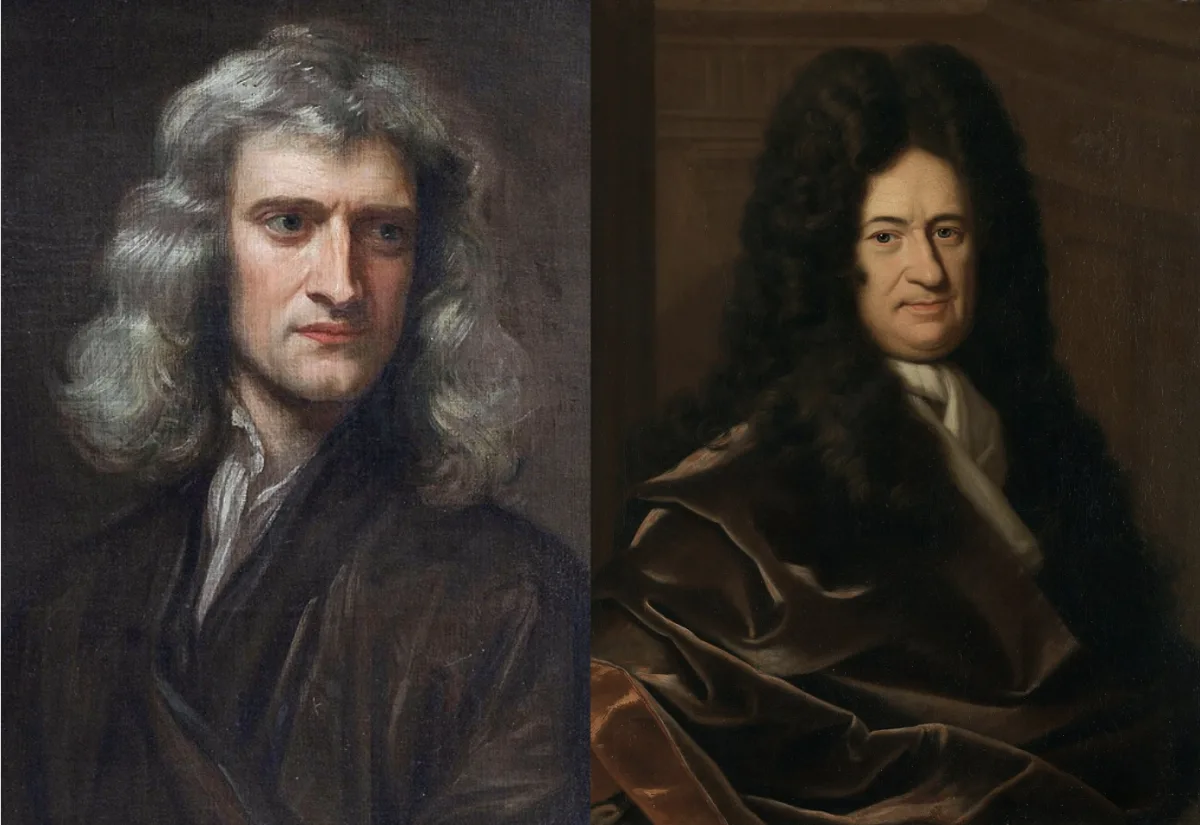
In practice, though their notation and explanations of calculus weren’t identical, both Newton and Leibniz faced a similar problem: what actually was an infinitely small quantity? The quantity couldn’t be zero, since dividing by zero is impossible, but when doing later calculations, they would be discarded as if they were zero. To critics, including Berkeley, this was a major inconsistency. How could you treat something as nonzero when you need to divide, just to treat it as zero once you want to discard it?
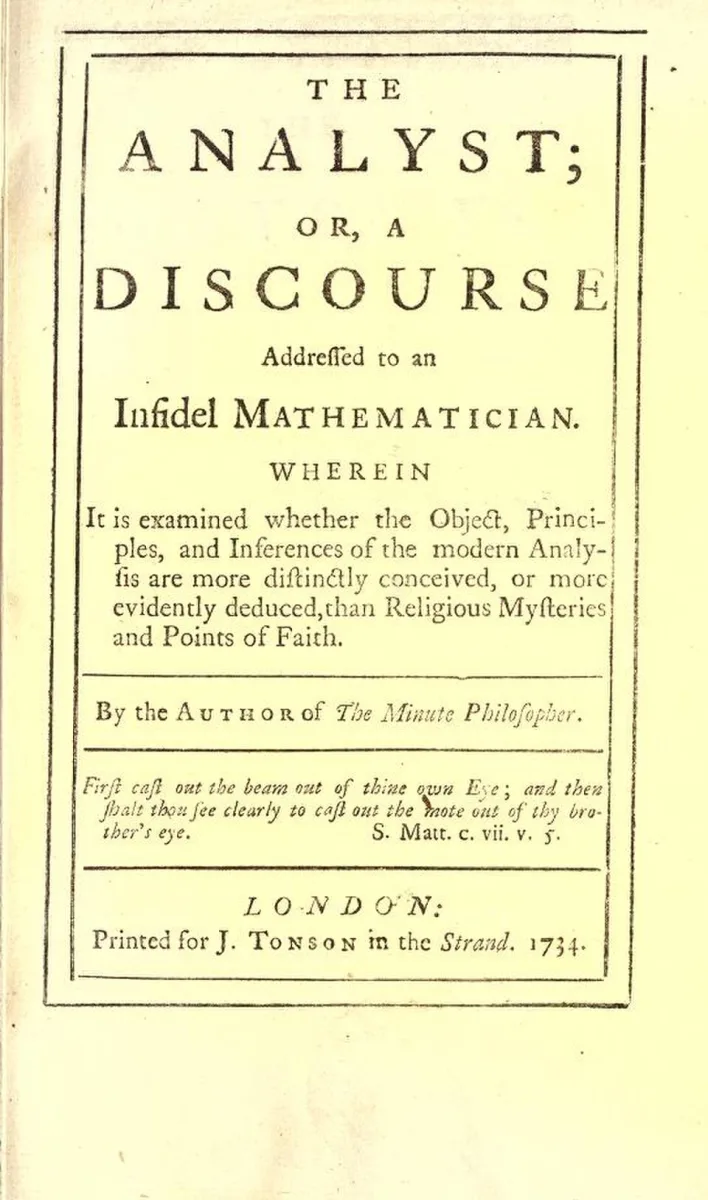
The religious purpose of The Analyst is clear in its full title, specifically the part “A Discourse Addressed to an Infidel Mathematician.” In it, he argued that the principles of modern math, specifically calculus, weren’t actually understood more clearly than the religious stories that mathematicians often mocked.
Essentially a response to those criticizing religion for accepting ideas that couldn’t be fully explained, Berkeley argued that mathematicians were doing the same thing. At the time, calculus depended on seemingly strange numbers that were neither zero nor ordinary quantities, and mathematicians trusted them only because the calculations worked and authorities like Newton used them. How was that any different from belief in God and religious authorities?
The Analyst was much more than a religiously motivated piece, however. The specific attack on fluxions and infinitesimals was correct. In one of his most scathing lines, he described infinitesimals as Ghosts of departed Quantities, writing, “And what are these Fluxions? The Velocities of evanescent Increments? And what are these same evanescent Increments? They are neither finite Quantities nor Quantities infinitely small, nor yet nothing. May we not call them the Ghosts of departed Quantities?”
Here’s a simple example of the problem described by Berkeley:
Consider a calculation for the derivative of $f(x) = x^2$
Suppose $x$ increases by a small amount $h$. The corresponding change in $x^2$ is $(x + h)^2 – x^2$
Expanding gives $x^2 + 2xh + h^2 – x^2 = 2xh + h^2$
To compare the change in $x^2$ with the change in $x$, divide by $h$: $\frac{2xh + h^2}{h} = 2x + h$
This division is only valid when $h \neq 0$
But, an explanation from that time would say that $h$ then vanishes, allowing the remaining $h$ to be removed: $2x + h = 2x$.
While the final answer was undoubtedly correct, Berkeley questioned what happened to $h$. When dividing, $h$ had to be nonzero. Otherwise, there would be division by zero, which couldn’t happen. At the final step, however, $h$ appeared to become zero. The calculation began by assuming that an increment existed and ended by assuming it didn’t, while still using a result obtained from the original assumption that an increment did exist. This was the contradiction Berkeley attacked.
If calculus was logically inconsistent, why did it keep producing correct answers? Berkeley had an explanation for this, arguing that flawed reasoning could still produce correct results if mathematicians made two errors that canceled each other out: “By virtue of a twofold mistake Analysts arrive at Truth, but not at Science: ignorant how they come to their own Conclusions.” The fact that calculus worked might just be luck, he argued, and wasn’t a justification for the methods mathematicians used.
So, was Berkeley right? In many aspects, he was. There genuinely were logical inconsistencies in how infinitesimals were used, and explanations of fluxions were generally quite vague. Importantly, though, he was only attacking the logic behind calculus, not its conclusions, which by that time, over fifty years after its development, were clearly correct.
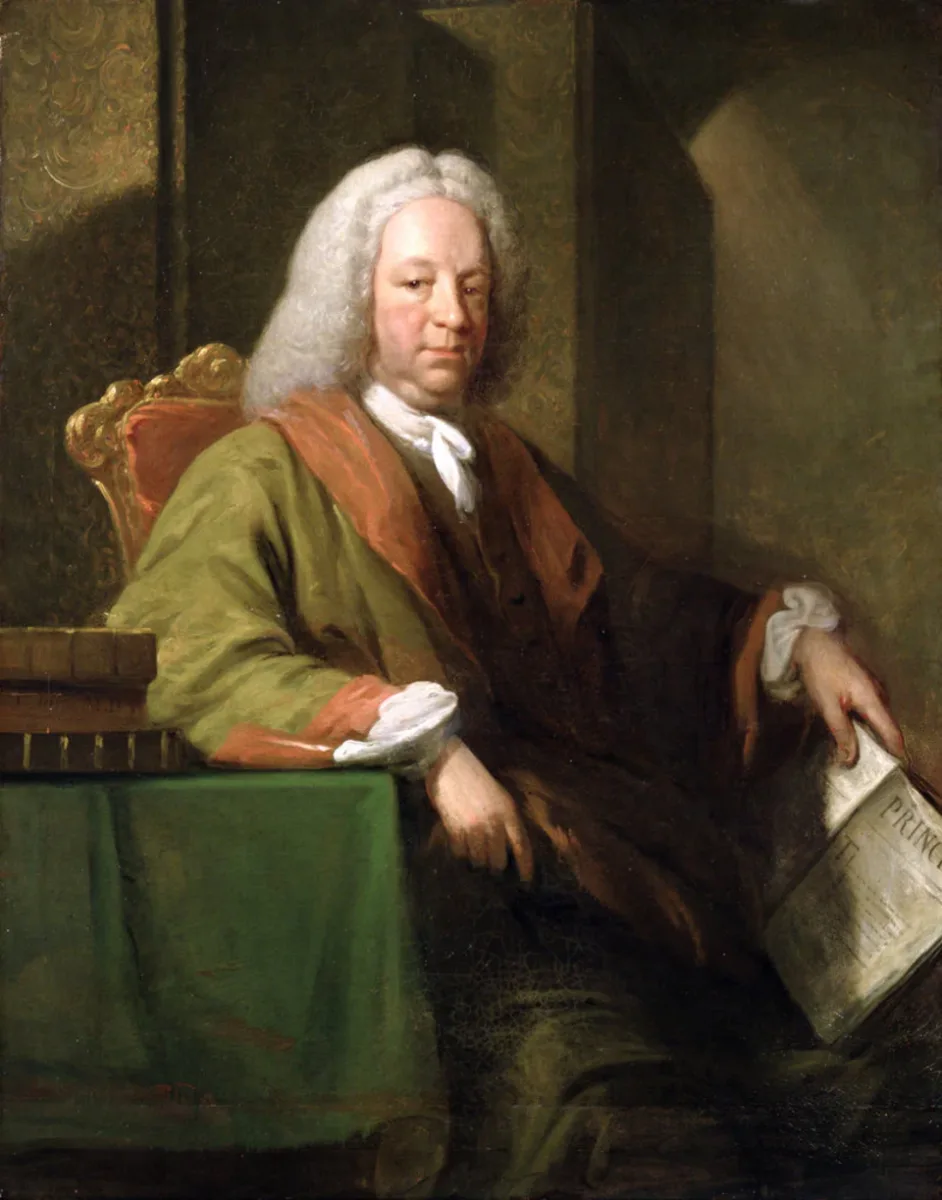
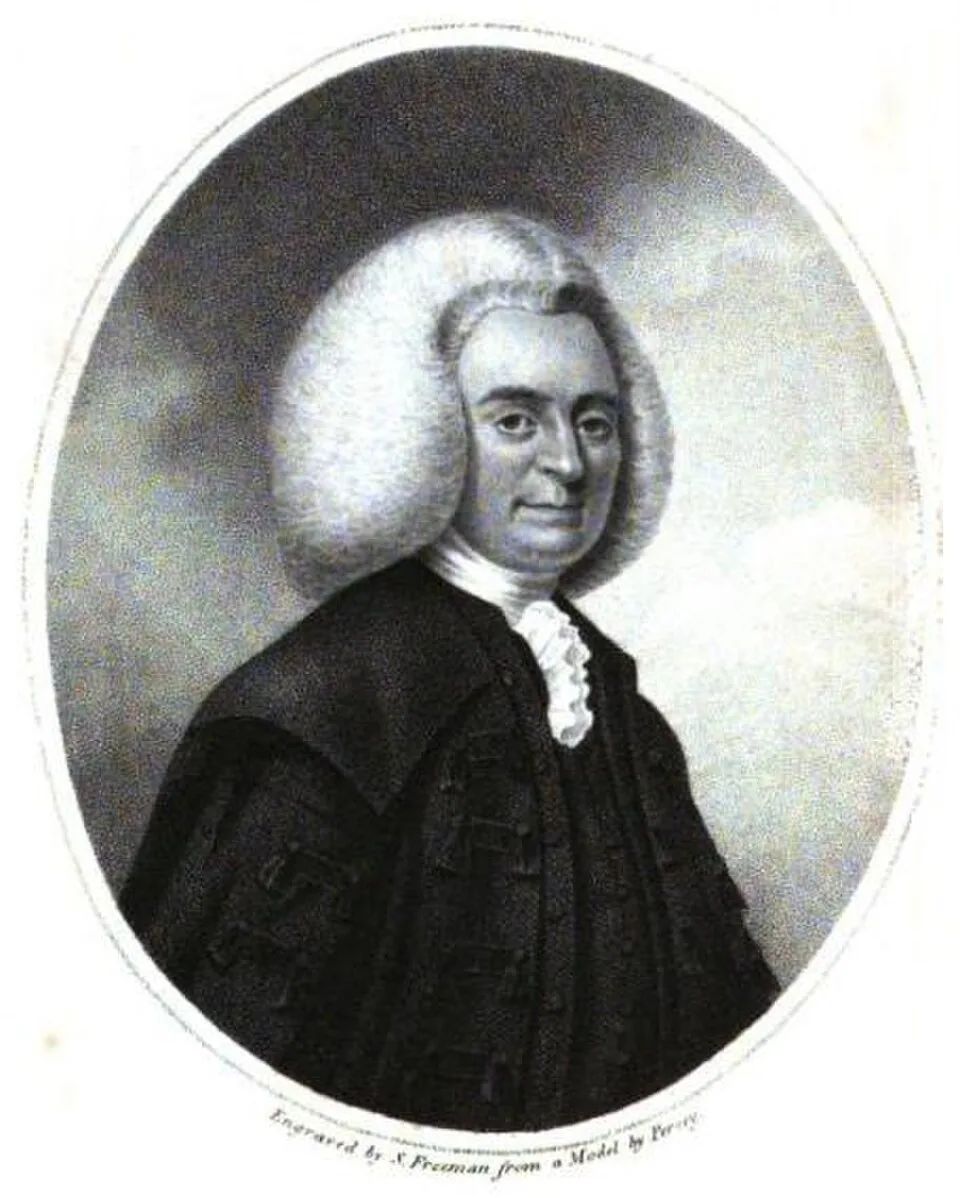
British mathematicians didn’t take his criticism lying down. In 1734, James Jurin, a physician and staunch defender of Newton, fired back with “Geometry No Friend to Infidelity,” defending Newton and British mathematics and objecting to Berkeley’s mixing mathematical criticism with a defense of religion.
Berkeley answered with A Defence of Free-Thinking in Mathematics, borrowing on the idea of a “freethinker,” a title often used by religious skeptics. He argued that if mathematicians truly valued free thinking and empirical evidence as they claimed, they would let Newton’s work be questioned, instead of immediately rallying to his defense.
A few years later, Colin Maclaurin (who you might know from the Maclaurin series) published one of the longest and deepest mathematical responses to Berkeley. In 1742, he published the two-volume Treatise of Fluxions, defending and elaborating on Newton’s calculus, trying to place it on a strict geometrical foundation by drawing on methods from ancient Greek geometry.
While Berkeley’s attack had merits, he wasn’t the end of calculus. It wouldn’t make sense to abandon a method that worked, even if there were criticisms of its foundations, so mathematicians continued using and expanding on calculus. Berkeley also wasn’t the sole force driving calculus towards greater rigor, as discoveries by other mathematicians over the next decades slowly laid the groundwork for a rigorous foundation. Almost ninety years after the publication of The Analyst, Cauchy would publish the Cours d’Analyse, a textbook that based calculus on the much more rigorous foundation of limits, finally moving away from the infinitesimals Berkeley criticized. Our article “How the French Revolution Revolutionized Calculus” covers the developments that led to calculus finally being placed on a rigorous foundation.
Although primarily a bishop and philosopher, Berkeley still had an important impact on the development of math through his criticisms in The Analyst. Though he was far from the sole force that led to the rigorous calculus we see today, he still had a major impact in pushing mathematicians like Maclaurin to analyze calculus more deeply. In doing so, he was one of the forces that eventually led to the limit-based calculus that we learn and use today.